Maria from memory
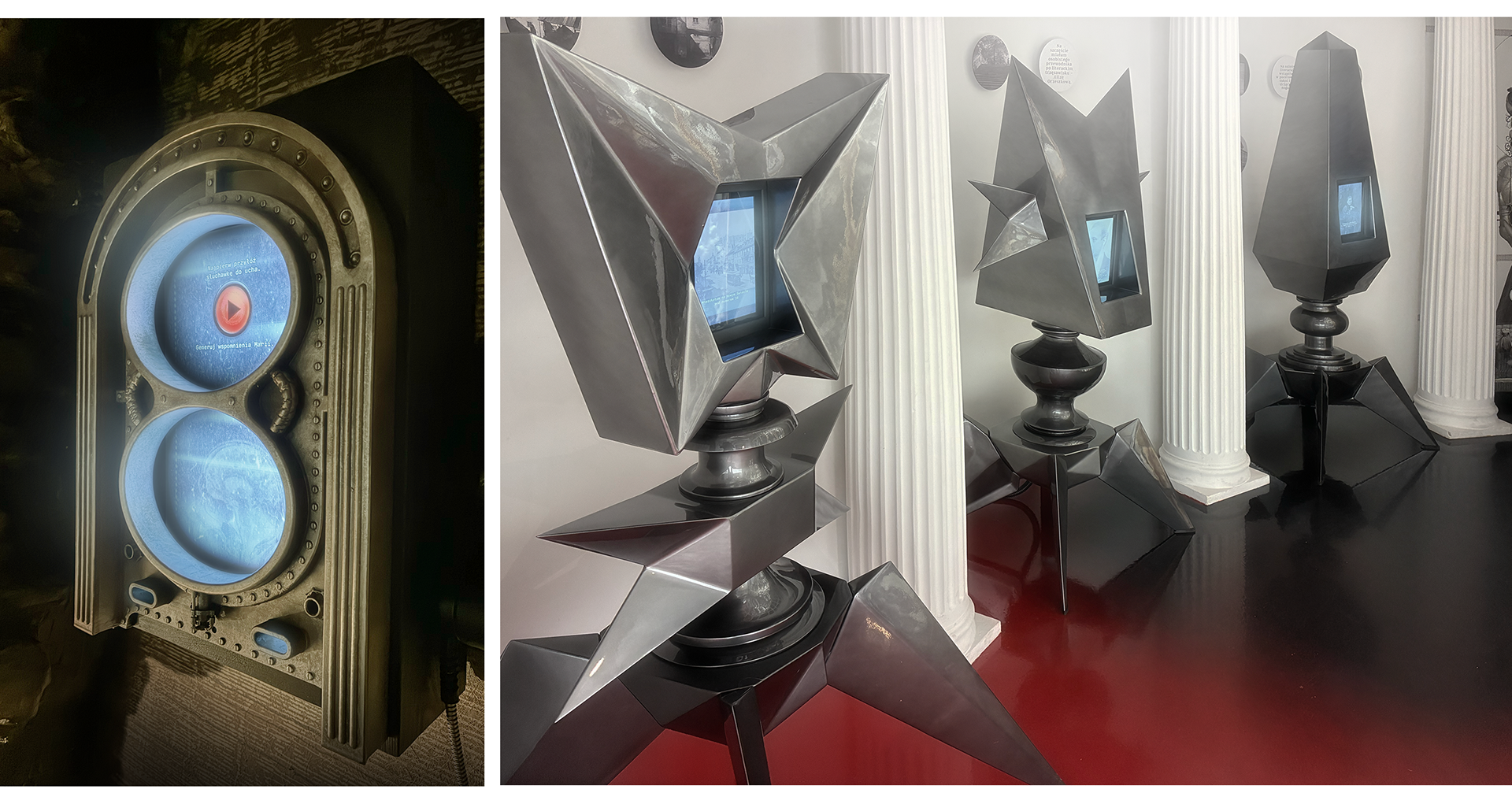
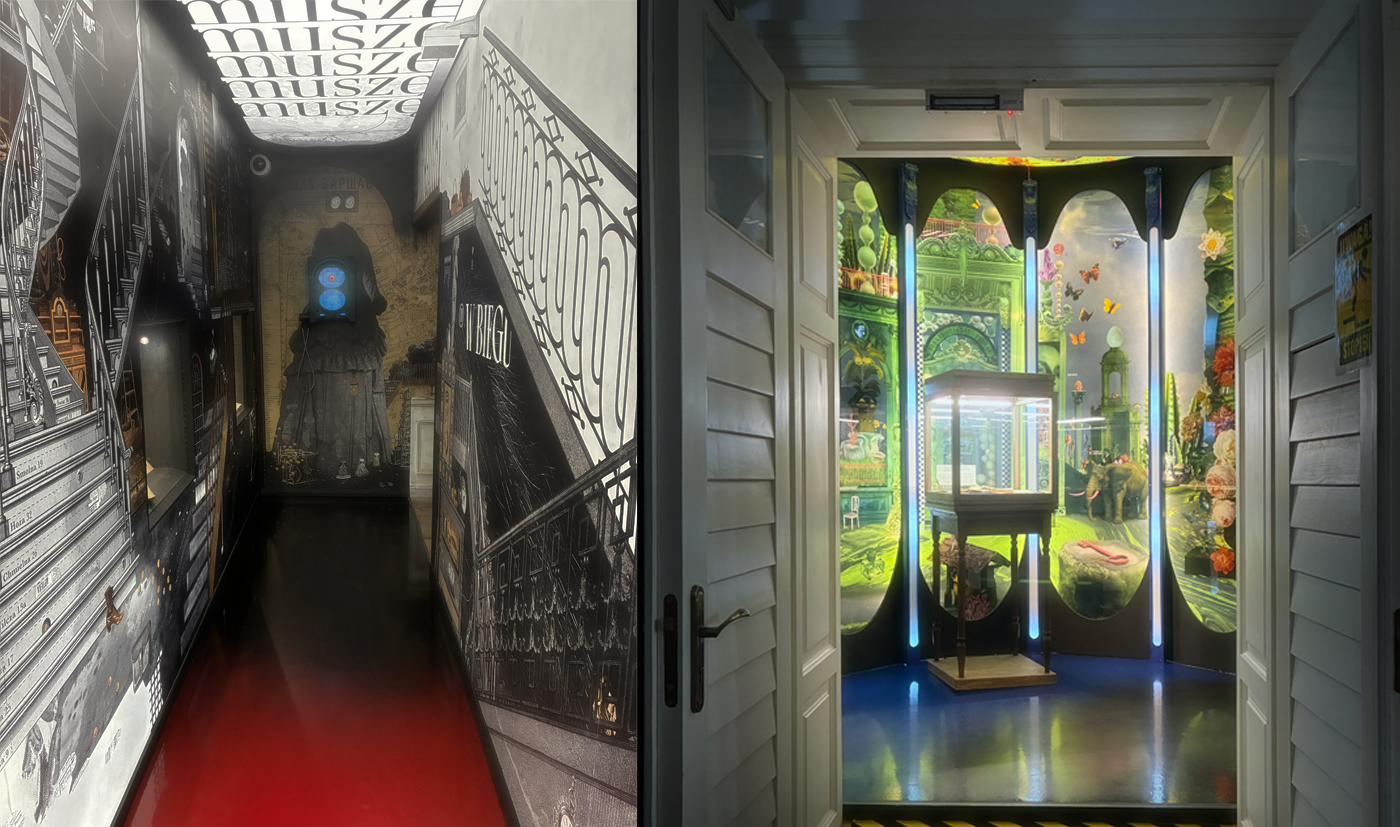
“Maria from Memory” — a permanent exhibition at the Maria Konopnicka Museum in Suwałki — is more of a theatrical performance than a standard museum exhibition. It appeals to the emotions and has a dreamlike atmosphere. The convention is unusual: the viewer enters Maria Konopnicka's mind with the help of a retrofuturistic memory-scanning machine and from that moment on can follow the poet's thoughts and feelings. Each scene is a different memory of Maria: a poetic impression of events, emotions, traumas, repressions, and important life dilemmas. In 2020, I created the script for a narrative exhibition at the Maria Konopnicka Museum in Suwałki. The exhibition was created in two stages: “Song of Home” and “On the Road.” In August 2025, the final version of the exhibition was opened to visitors.
Museum exhibition scripts written by artists rather than scholars (historians, art historians, archaeologists, etc.) are practically non-existent in the museum world. This exhibition, in which emotions take precedence over facts, is a very rare specimen.
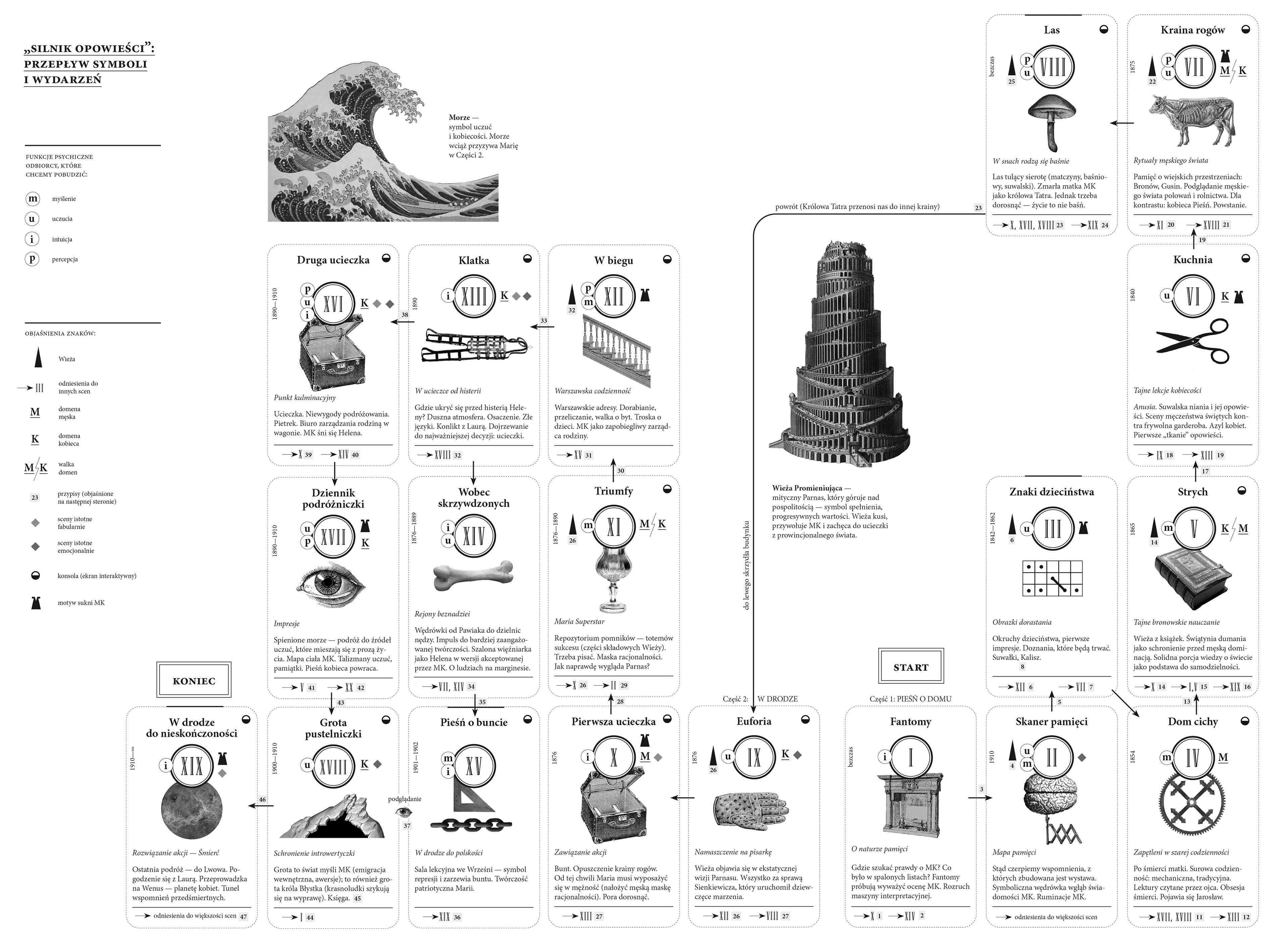
The principle that dictates the narrative and poetics of the scenes and the structure of the plot is the adoption of the perspective of the exhibition's protagonist. The chosen convention of presenting her biography as a visionary sequence of memories — a journey through the recesses of her mind — is dictated by the protagonist's introversion. Her mind holds the greatest narrative potential: a vivid imagination, her own cognitive filter, errors and distortions in her perception of reality, dreams, ambitions, a mosaic of emotions, intertwining (sometimes contradictory) worldviews, repressions, and transference. All of this swirls around in her head, and the viewer enters her mind — exploring, gathering clues, saturating themselves with emotions, activating their imagination, and making observations.
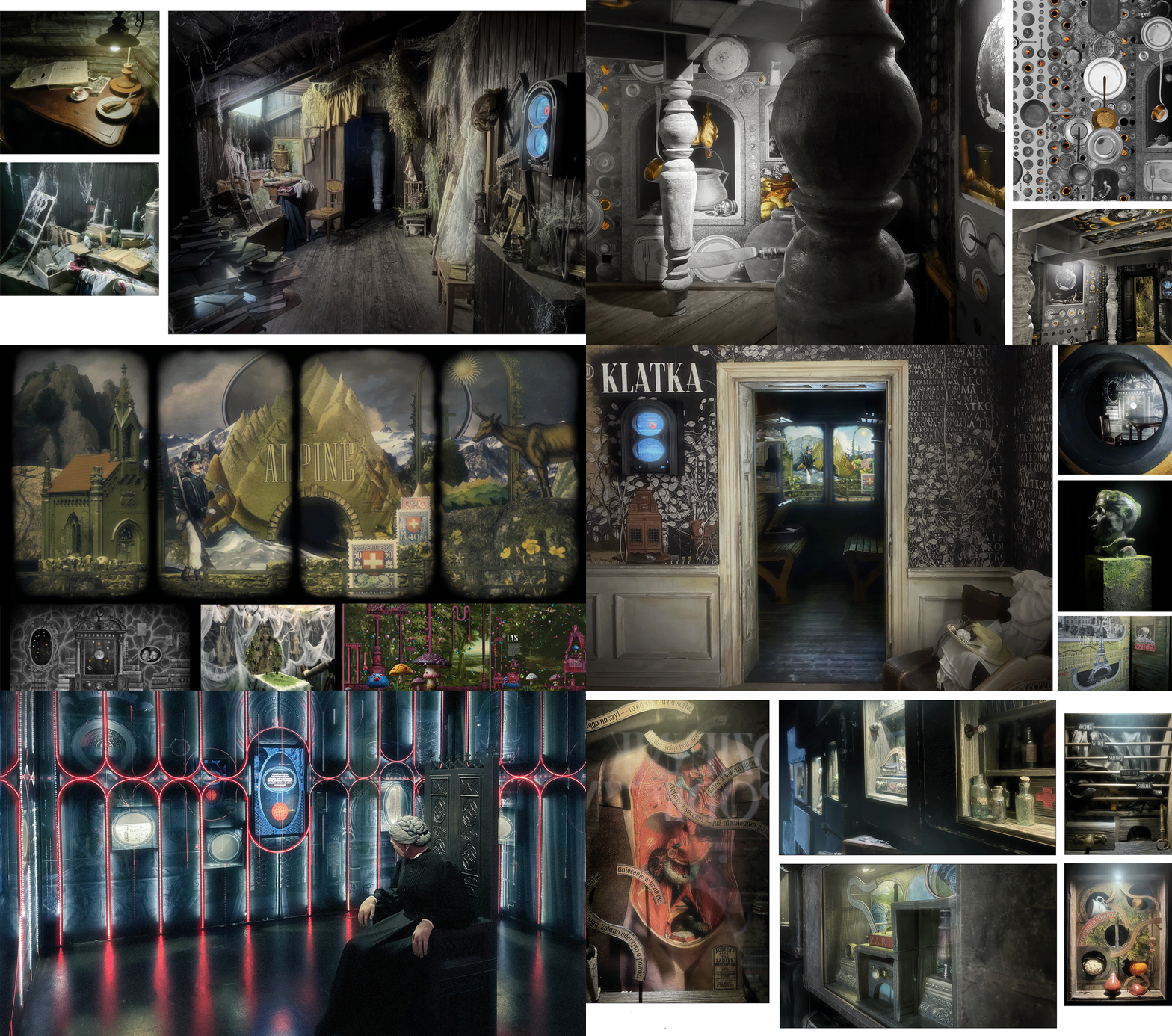
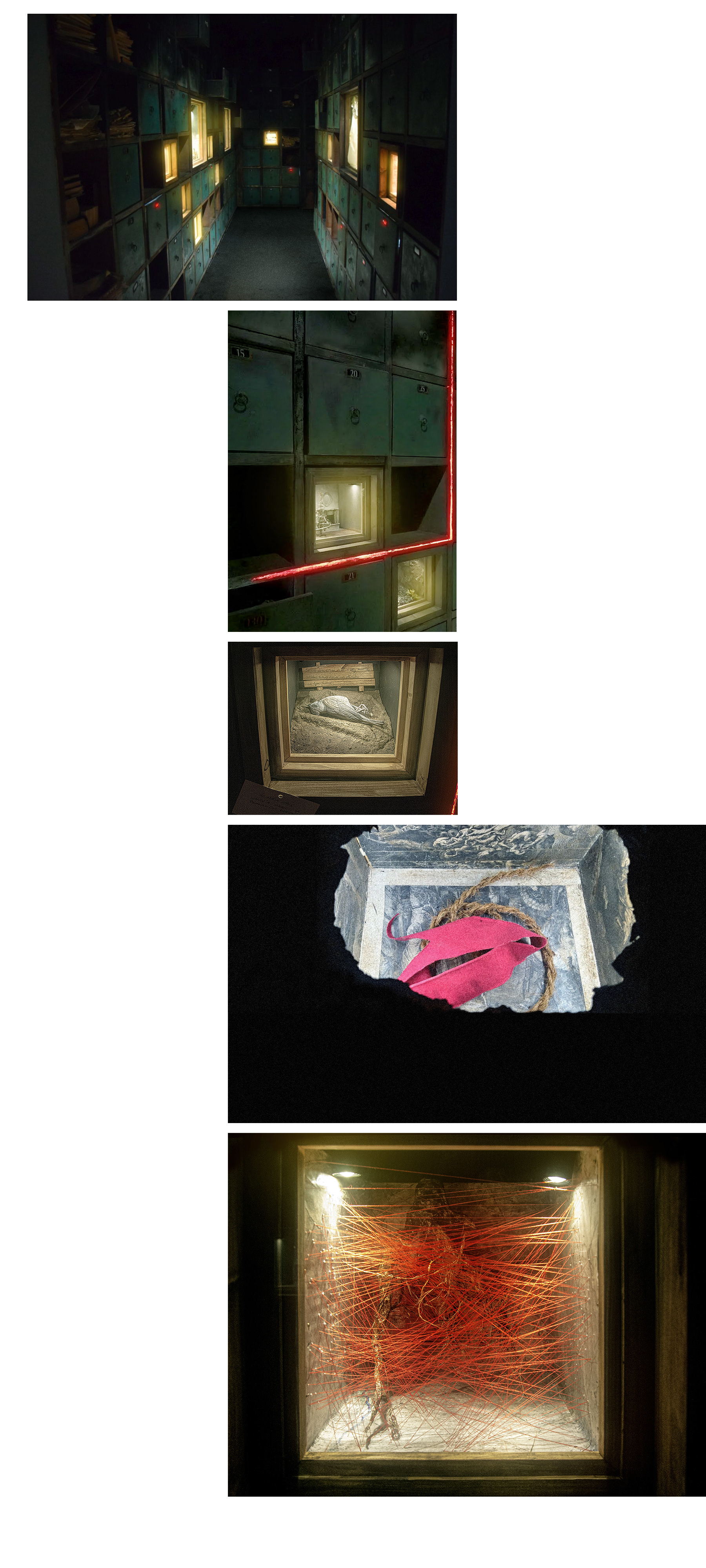
The first part, entitled “Song of Home,” describes the first stage of MK's life: static, secure, clearly connected to his family home—the place where he grew up and underwent intense emotional and intellectual development. The manor house in Suwałki, his birthplace, is presented here as a topos of home as a mother's bosom, where everything is first and intense. Sensory impressions and intellectual impulses saturate MK's young soul, becoming the fuel that powers her later writing and social demands. They also become the driving force behind the awakening of a special sensitivity to the world, in which the now mature heroine of this museum story makes her own — and often controversial for her contemporaries — life decisions. The first part of our exhibition is an attempt to trace, on the basis of visionary images from the entire catalog of MK's memories, which saturated her writer's and woman's soul. We gain access to her life dramas, but also to her first fascinations with the world, its energy, mystery, and anxiety. In this part, MK filters reality mainly through her feelings, hence the dilemmas, emotional ups and downs, and undefined longings. However, MK gradually enriches her knowledge and prepares to enter a new chapter in her life, in which feelings will be replaced by thinking. The viewer should feel as if they are inside MK's head, which contains traces of the past. After viewing the last scene in this part, the viewer returns to the main hall to begin viewing the second part.
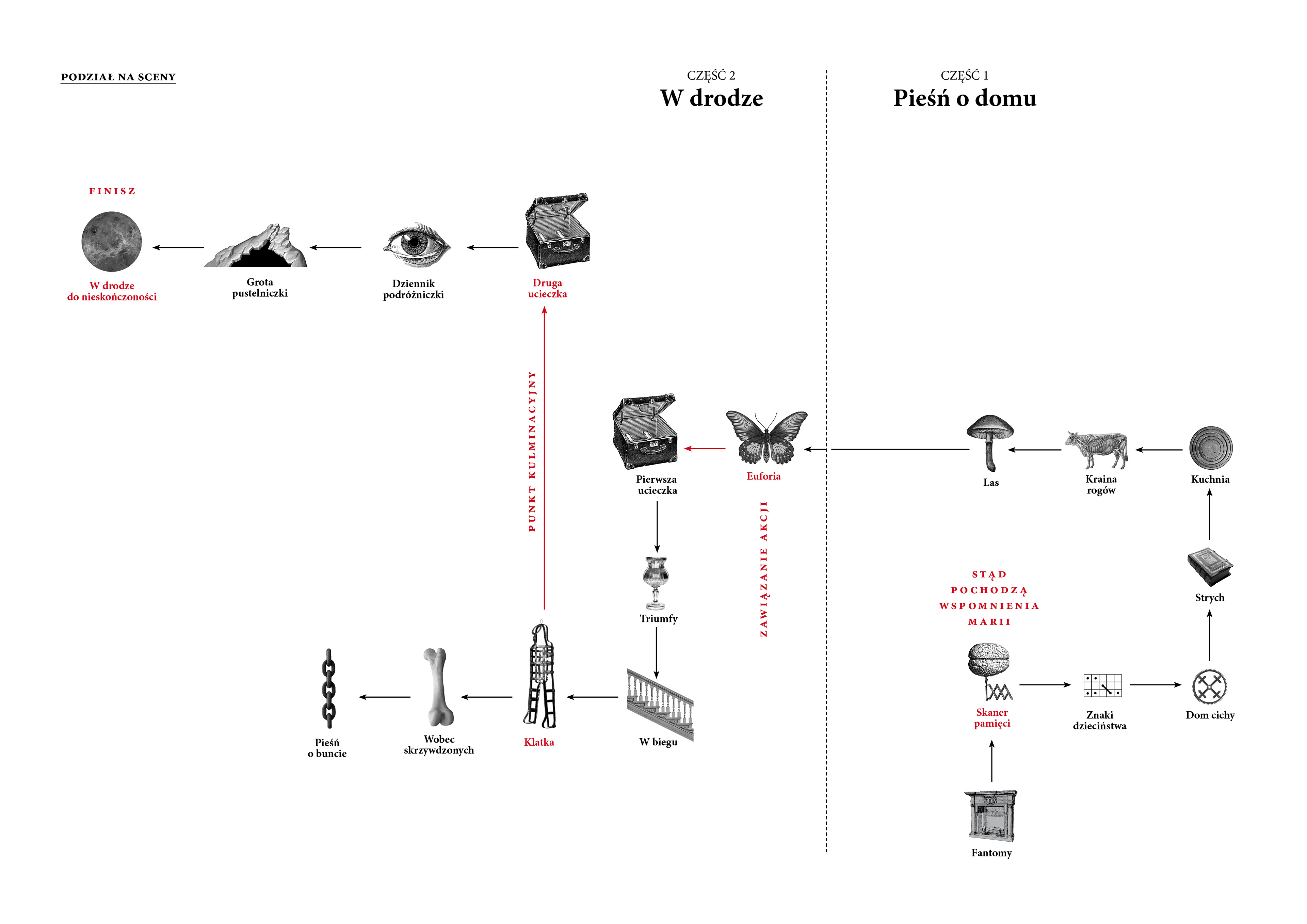
The second part of the exhibition, entitled “On the Road,” describes the life and work of Maria Konopnicka as a mature woman who made the uncompromising decision to become independent and take on the role of a writer in a difficult era. Breaking up with her husband (one of the first scenes in this part) is the first courageous decision in her life, the beginning of a great adventure, the start of an avalanche of events. The convention of storytelling through MK's direct accounts (memories, dreams, traces of emotions), initiated in part 1, is continued here until the very end. The narrative becomes even more cinematic—we can divide it into three basic pillars of the plot: the beginning of the action (“throwing into adventure”—scene IX, ‘Euphoria’), the climax (scene XIII, “The Cage”), and the resolution of the action (scene XIX, On the Way to Infinity). Now the narrative accelerates, marked by movement, the drive for self-improvement, ambitious approaches to problems, and numerous escapes. In each scene, the story is told through set design, multimedia, graphics, and soundscape. The viewer of the exhibition experiences the great journey of life, during which the writer makes up for lost years spent in unfulfillment and minimal growth in ambition. The viewer of the exhibition experiences a great journey of life, during which the writer makes up for lost years spent in unfulfillment and minimal growth in ambition. The lessons she learned in earlier years come in handy on this journey. We also discover the spiritual wounds caused by being stuck in the destructive role of a hostage to her ambitions. MK functions in a world full of contrasts, social injustice, and the humiliation of women. She cultivates the memory of her lost freedom and lives in the hope of regaining it. The most interesting thing seemed to be finding in her biography those elements, facts, or phenomena that can be accepted and recognized as the real reasons for her life and intellectual decisions. This is the “meat” of the script — seemingly obvious in the case of a film or novel, but unheard of in the case of a museum exhibition.
And then the words were transformed into stage design, multimedia, sculptural objects, display cases, and graphic installations.
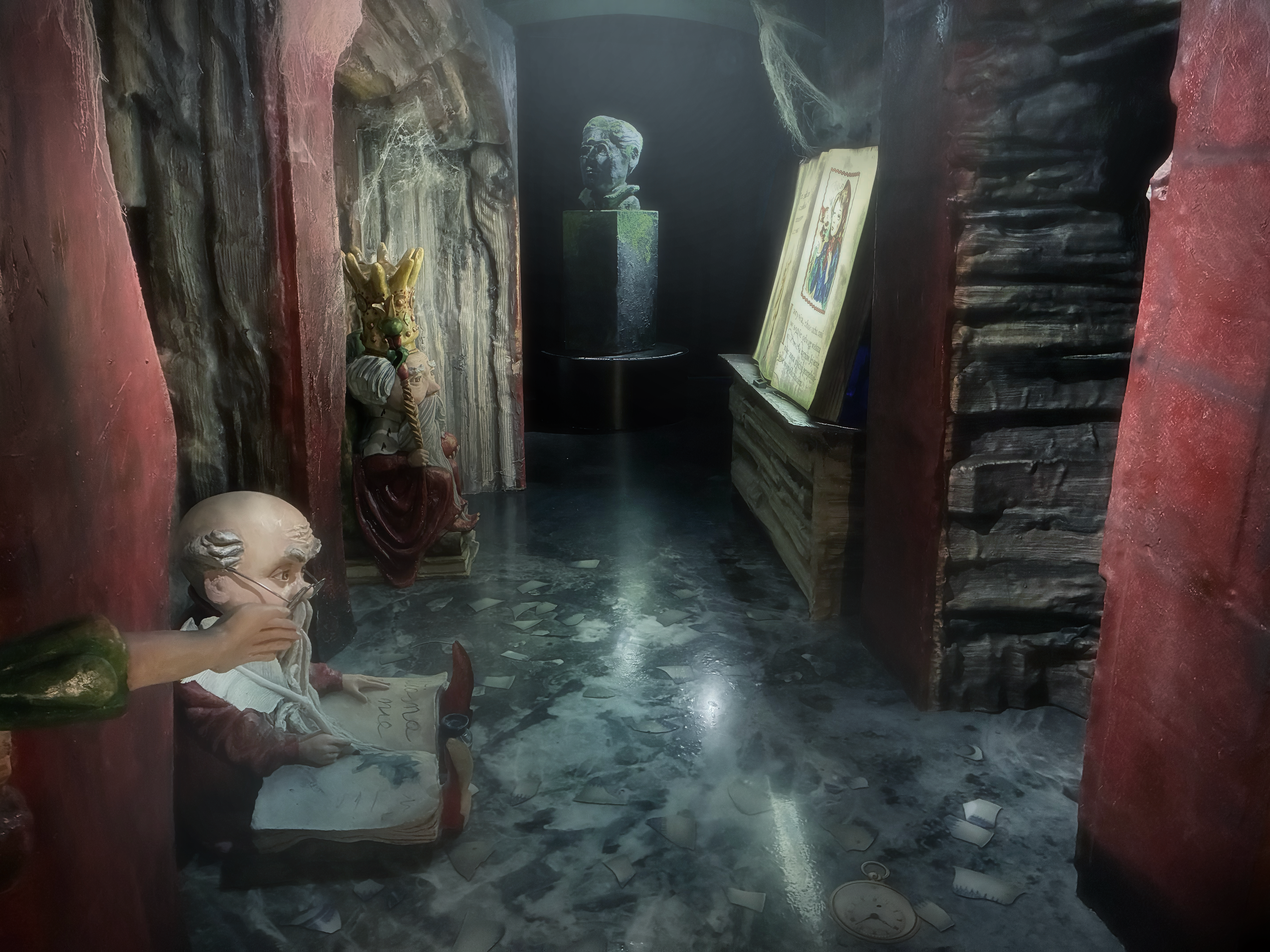
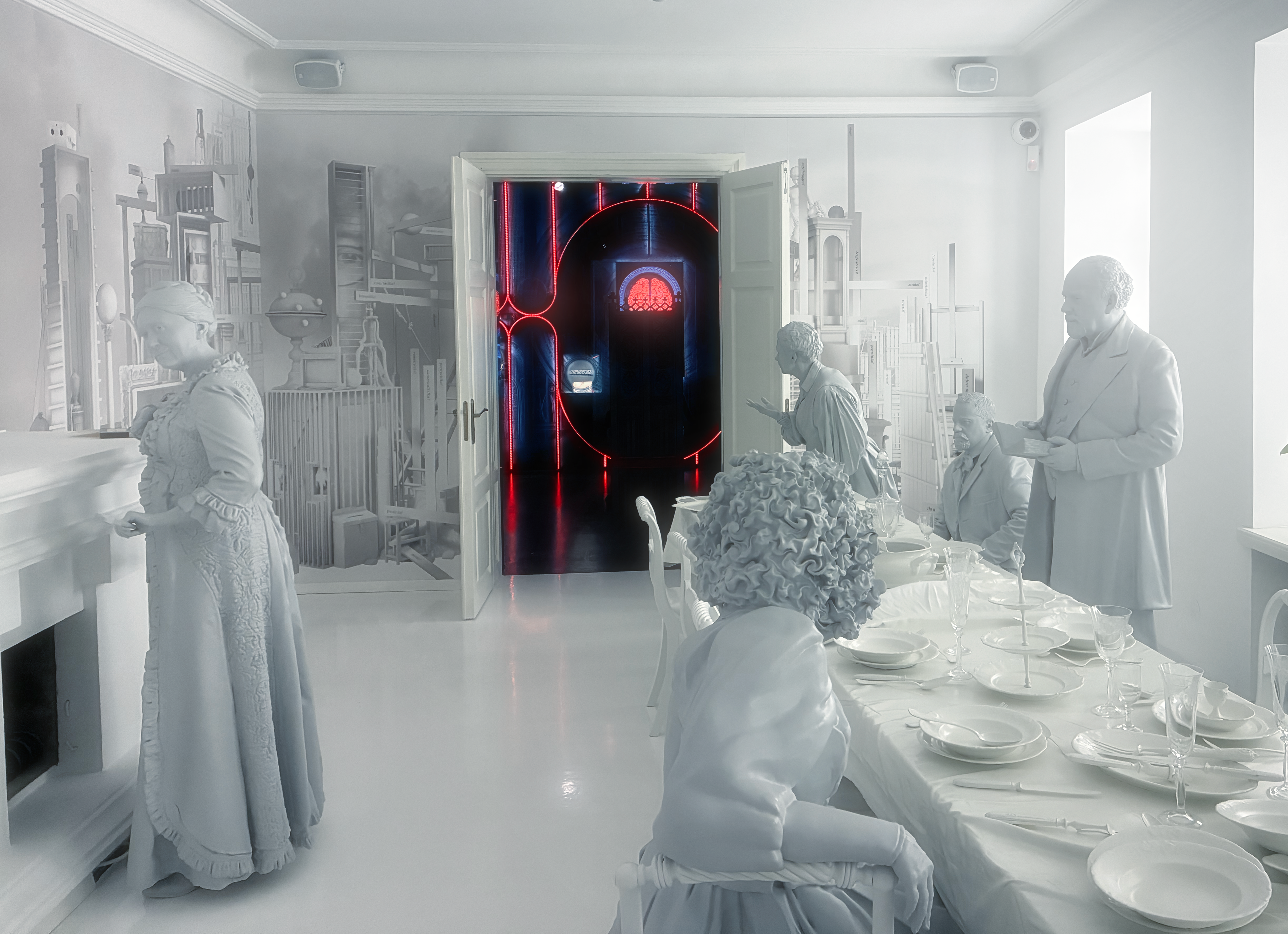
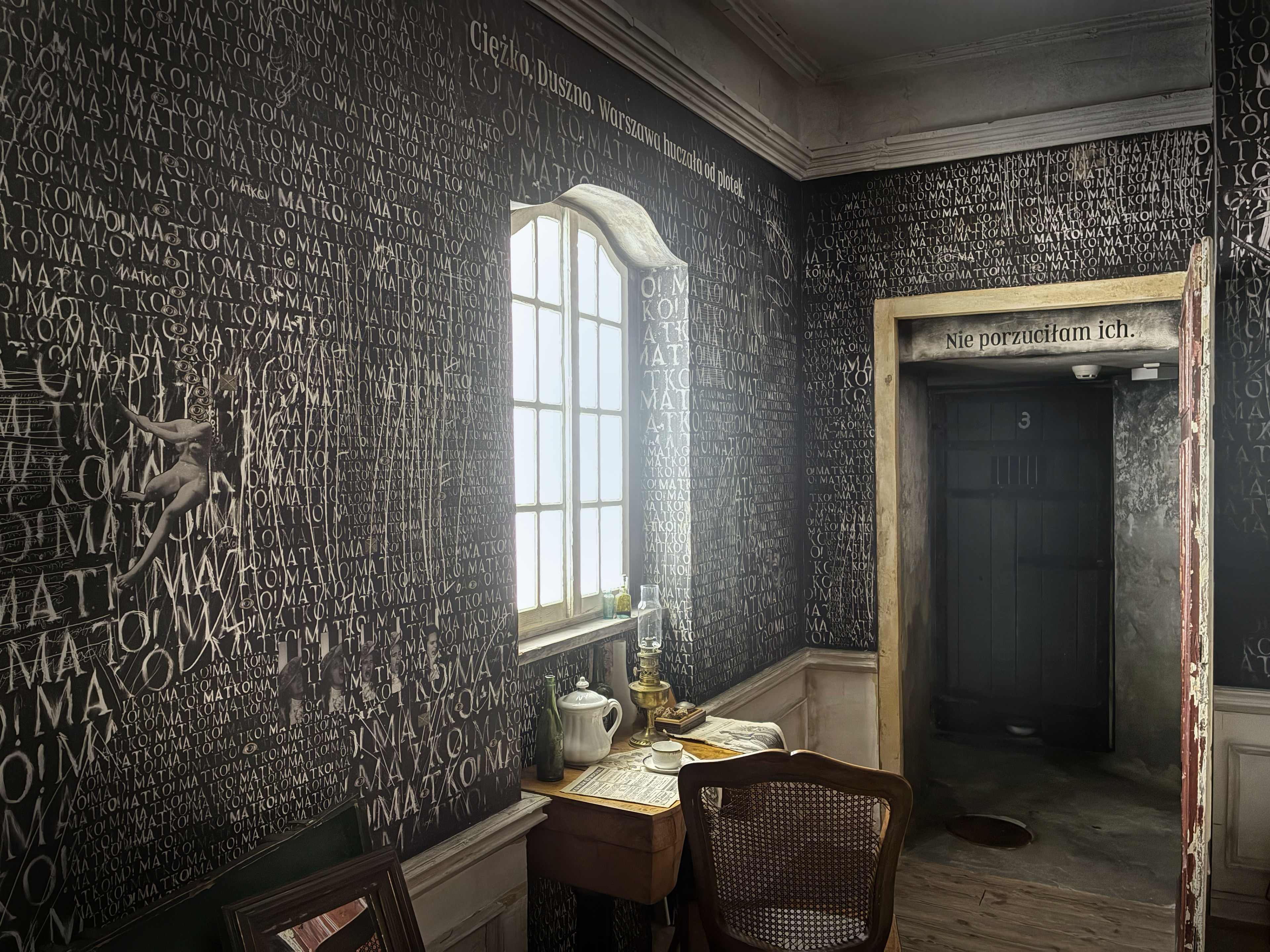
Magdalena Grzebałkowska o wystawie: Powiem wam, że Muzeum Marii Konopnickiej w Suwałkach to jest kompletny odjazd! Otwarte po remoncie tydzień temu, prezentuje wystawę konceptualną na najwyższym światowym poziomie. Lećcie tam jak na skrzydłach, ja wyszłam dziś oszołomiona.
Koncepcja i projekt wystawy: Michał Urban, Zalibarek — Scenariusz, teksty literackie, reżyseria filmów: Zalibarek —Ilustracje, opracowanie graficzne, animacje: Victor Soma — Współpraca: Magdalena Wołowska-Rusińska, Krzysztof Skłodowski — Współpraca organizacyjna: Jerzy Brzozowski, Wiesław Kapla — Wykonawcy: Group AV, Immersive Space Project — Produkcja multimediów: Inani.pl, Studio Storytellers — Sprzęt multimedialny: Group AV
Eksponaty ze zbiorów: Muzeum Literatury w Warszawie, Muzeum Marii Konopnickiej w Żarnowcu, Archiwum Państwowego w Suwałkach, Muzeum im. Marii Konopnickiej w Suwałkach, Muzeum Okręgowego w Suwałkach. Wystawa współfinansowana ze środków Europejskiego Funduszu Rozwoju Regionalnego w ramach projektów LT-PL-4R-280 Poezja transgraniczna malowana słowami oraz LT-PL-00009 Transgraniczna droga do nieskończoności wspomnień. Partnerzy projektów: Alytaus Kraštotyros Muziejus, Lazdijų Krašto Muziejus. Specjalne podziękowania dla Teatru im. J. Słowackiego w Krakowie za pomoc w realizacji filmów. Wystawa współfinansowana z budżetu Miasta Suwałki
W filmach wystąpili: Iwona Budner (Teatr Stary w Krakowie) jako głos Marii Konopnickiej — Oriana Soika (Teatr Polski w Bielsku-Białej) jako dorosła Maria Konopnicka — Jolanta Żaborowska jako dojrzała Maria Konopnicka — Mariusz Krzywicki jako Jarosław Konopnicki, mąż Marii — Julia Kowalczyk oraz Kalina Kubiś-Mroszczyk jako mała Maria Konopnicka — Joanna Nadrowska jako Maria Dulębianka — Lea Pradzinski jako Helena Konopnicka, córka Marii — Marta Waldera (Teatr im. J. Słowackiego w Krakowie) jako Eliza Orzeszkowa — Zalibarek jako Henryk Sienkiewicz — Grzegorz Łukawski jako Józef Wasiłowski, ojciec Marii Konopnickiej — Natalia Strzelecka (Teatr im. J. Słowackiego w Krakowie) jako Scholastyka Wasiłowska, matka Marii Konopnickiej — Celina Kulińska-Kalarus, Antoni Atanassow, Antoni Hulicki, Franciszka Kowalczyk, Maria Kowalczyk, Jagoda Wiecha jako rodzeństwo Marii — Ewelina Casette (Teatr im. J. Słowackiego) jako służąca w kaliskim domu — Sławomir Rokita (Teatr im. J. Słowackiego) jako woźnica — Jakub Urban jako służący z węglem — Dorota Jakubik jako niania w suwalskim domu — Magdalena Januszczak jako służąca w suwalskim domu — Agnieszka Judycka, Halina Jarczyk, Marcin Kalisz, Marcin Sianko, Tomasz Augustynowicz, Daniel Malchar, ś.p. Feliks Szajnert, Karol Kubasiewicz (wszyscy: Teatr im. J. Słowackiego w Krakowie) jako literaci na przyjęciu